
Drum
Unknown Artist
ca. 500 BCE–300 CE
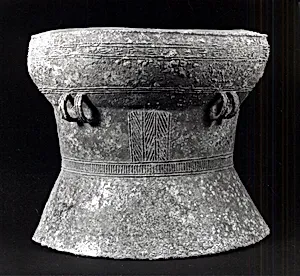
Medium
Bronze
Dimensions
H. 7 5/8 in. (19.4 cm); Diam. of tympanum: 9 1/4 in. (23.5 cm); Diam. of base: 9 in. (22.9 cm)
Classification
Metalwork
Culture & Period
Indonesia · Bronze and Iron Age period
Department
Asian Art
Museum
Metropolitan Museum of Art, New York, NY
Credit
Samuel Eilenberg Collection, Bequest of Samuel Eilenberg, 1998
Accession Number
2000.284.50
Rights
Public Domain
Art Historical Context
This exquisite bronze drum, crafted by an unknown artist in Indonesia the Bronze and Iron Age (ca. 500 BCE–300 CE), stands as a testament to the region's early mastery of metalworking. Measuring just 7⅝ inches tall with a 9¼-inch tympanum, its compact yet robust form—complete with a stable 9-inch base—suggests it was both a functional percussion instrument and a ceremonial object. The choice of bronze, a durable alloy requiring sophisticated lost-wax casting techniques, highlights the technological prowess of ancient Indonesian artisans during a period of cultural flourishing across Southeast Asia. Drums like this held profound cultural significance, likely used in rituals, communal gatherings, or as symbols of status and spiritual power. In the Asian Art context, they represent the interconnected trade networks of the Bronze Age, where motifs and forms spread from mainland Asia to island cultures like Indonesia's. Its intricate proportions and resonant potential would have amplified voices in ancestral ceremonies, echoing through villages and invoking communal harmony. Now part of the Metropolitan Museum of Art's Samuel Eilenberg Collection (bequest, 1998), this drum invites us to ponder the rhythmic heartbeat of prehistoric Indonesia, bridging the ancient past with our modern appreciation for functional art.