
Drum
Unknown Artist
late 19th century
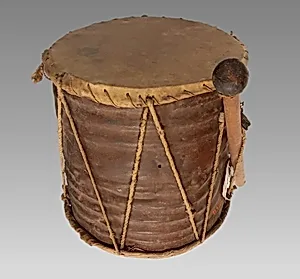
Medium
corrugated metal, cord
Dimensions
Height 10 in., Diam. 9-1/2 in., Stick 13-1/2 in.
Classification
Membranophone-double-headed / cylindrical drum
Culture
Papua New Guinean
Department
Musical Instruments
Museum
Metropolitan Museum of Art, New York, NY
Credit
The Crosby Brown Collection of Musical Instruments, 1889
Accession Number
89.4.1392
Rights
Public Domain
Art Historical Context
This late 19th-century drum from Papua New Guinea exemplifies the ingenuity of traditional instrument-making in the region. Crafted from corrugated metal for the body and cord foring, it stands just 10 inches tall with a 9½-inch diameter, accompanied by a 13½-inch beater stick. As a double-headed cylindrical membranophone, it produces resonant tones when the stretched membranes are struck, a design common in Pacific Island cultures for its portability and powerful sound projection. In Papua New Guinean societies, such drums played vital roles in rituals, ceremonies, dances, and communal gatherings, serving as the heartbeat of social and spiritual life. The use of corrugated metal hints at adaptations during the colonial era, blending indigenous techniques with introduced materials, showcasing cultural resilience and innovation. Though the artist remains unknown, this piece reflects the broader artistic tradition of functional objects elevated to cultural treasures. Acquired as part of The Crosby Brown Collection of Musical Instruments in 1889, it now resides in The Metropolitan Museum of Art's Department of Musical Instruments. Visitors can appreciate how it bridges music, craftsmanship, and history, inviting us to imagine the vibrant rhythms echoing through Papua New Guinean villages.