
Drum
Unknown Artist
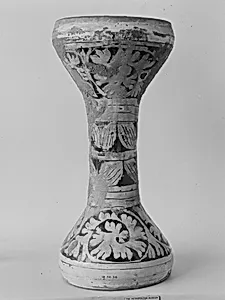
Medium
Pottery (Cizhou ware)
Dimensions
H. 13 1/2 in. (34.3 cm); Diam. of top 6 in. (15.2 cm); Diam. of base 6 in. (15.2 cm)
Classification
Ceramics
Culture & Period
China · Tang dynasty (618–907)
Department
Asian Art
Museum
Metropolitan Museum of Art, New York, NY
Credit
Rogers Fund, 1918
Accession Number
18.56.34
Rights
Public Domain
Tags
Art Historical Context
This pottery drum, created Cizhou ware during China Tang dynasty (618–), offers a fascinating glimpse into the’s ceramic artistry. Standing 13½ inches tall a balanced 6-inch at both top and base, the piece demonstrates how potters transformed sturdy clay into functional objects that echoed the shape and resonance of traditional drums. Acquired by the Metropolitan Museum of Art through the Rogers Fund in 1918, it now resides in the museum’s Asian Art collection as a testament to Tang innovation in everyday and ceremonial wares. Cizhou ware, produced in northern China, is celebrated for its durable stoneware body and often subtle decorative slips that enhanced both strength and appearance. In the Tang period—a golden age of cultural exchange along the Silk Road—such ceramics extended beyond vessels to include musical instruments, suggesting that this may have served ritual, educational, or even performative purposes where a lightweight, resonant clay form was preferred. The object invites visitors to consider how Tang artisans blended utility with creative expression, turning humble pottery into lasting echoes of ancient sound and ceremony.