
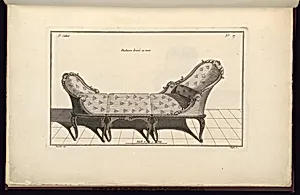
Duchesse brisée en trois
Medium
Classification
Department
Smithsonian Collection
Museum
Smithsonian American Art Museum
Credit
Purchased for the Museum by the Advisory Council
Accession Number
1921-6-252-18
Rights
Public Domain
About this artwork
Research in Progress
Art Historical Context
Juste-François Boucher’s “Duchesse brisée en trois,” created around 1775, offers a glimpse into late-eighteenth-century French printmaking. Born in 1736 and active until 1782, the artist worked during a period when prints served as accessible vehicles for design ideas, fashion, and decorative motifs across Europe. This example, now in the Smithsonian American Art Museum, was acquired through the museum’s Advisory Council, underscoring the institution’s interest in European works that illuminate transatlantic artistic exchange. As a print, the work demonstrates the technical precision and reproducibility that made such pieces essential to disseminating aristocratic taste. The evocative title suggests a study or representation of a “duchesse,” a luxurious daybed form popular in French interiors, shown “brisée en trois”—perhaps in sections or as a convertible design. Though research on the specific subject remains in progress, the piece reflects the refined visual culture of pre-Revolutionary France, where elegant furnishings and their printed depictions helped shape domestic ideals. Visitors can appreciate how Boucher’s print bridges fine art and applied design, inviting contemplation of both its aesthetic qualities and its role in documenting eighteenth-century material culture.