
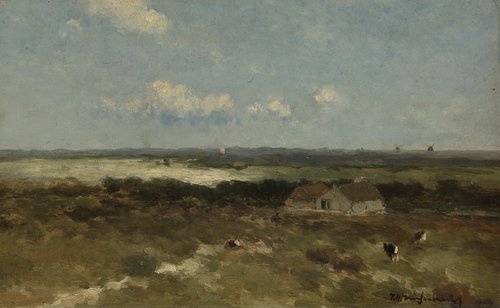
Dune landscape
1870 - 1896
Medium
oil on panel
Dimensions
21; 4; 8.5; 34
Rights
Public Domain
About this artwork
geheel: gewicht 4 kg (drager incl. SK-L-3192)
Art Historical Context
Johan Hendrik Weissenbruch’s “Dune Landscape” captures the quiet poetry of the Dutch countryside during the late nineteenth century. Created between 1870 and 1896, the modest oil-on-panel work reflects the spirit of the Hague School, a movement that championed naturalistic light and atmospheric effects over dramatic narrative. Weissenbruch, often called “the poet of the Dutch dunes,” spent decades exploring the shifting sands and expansive skies near The Hague, finding endless inspiration in their subtle color harmonies and ever-changing weather. Painted on a small wooden panel measuring just 21 by 34 centimeters, the work invites close viewing. Oil on panel was favored by Hague School artists for its smooth surface, which allowed delicate brushwork and luminous glazes that evoke the moist sea air and pale sunlight filtering through clouds. The intimate scale suggests the piece was intended for a private collection rather than a grand salon, offering viewers a personal encounter with nature’s understated beauty. Today housed in the Rijksmuseum, “Dune Landscape” stands as a testament to Weissenbruch’s lifelong fascination with the Dutch landscape’s quiet grandeur. Its restrained palette and careful attention to light continue to reward visitors who pause to appreciate the artist’s sensitive rendering of place and season.