
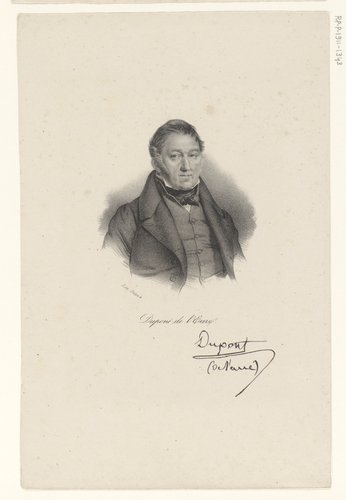
Dupont de l'Eure
in of na 1818 - in of voor 1842
Medium
lithography
Dimensions
179; 273
Rights
Public Domain
About this artwork
blad: hoogte 273 mm x breedte 179 mm
Art Historical Context
**Dupont de l'Eure** This lithograph, titled *Dupont de l'Eure*, emerges from the Paris studio of veuve Delpech (Naudet), widow of the pioneering lithographer François Séraphin Delpech. Produced anonymously sometime between 1818 and 1842, it measures 273 mm high by 179 mm wide, capturing the era's fascination with printed portraits. Lithography, a revolutionary technique invented just two decades earlier, allowed for detailed reproductions from stone plates, making high-quality images affordable and widespread—perfect for disseminating likenesses of public figures during France's turbulent post-Revolutionary years. The subject, Jacques-Charles Dupont de l'Eure (1763–1855), was a key French statesman, a Girondin deputy during the Revolution who later championed moderate republican ideals through the Restoration and July Monarchy. This print reflects lithography's role in shaping public memory, turning political leaders into familiar icons for an emerging bourgeois audience. Veuve Delpech's studio was renowned for such portraits, blending precision with accessibility. As an early example of commercial lithography, this modest sheet highlights a medium that bridged fine art and mass media, influencing everything from newspapers to album collections. Visitors, imagine holding a piece of 19th-century political culture in your hands! (198 words)