
Durham Cathedral
1923
Medium
etching in black
Dimensions
plate: 16.8 × 20.2 cm (6 5/8 × 7 15/16 in.)
Classification
Department
CG-W
Museum
National Gallery of Art, Washington, D.C.
Credit
Rosenwald Collection
Accession Number
1943.3.8349
Rights
Public Domain
Art Historical Context
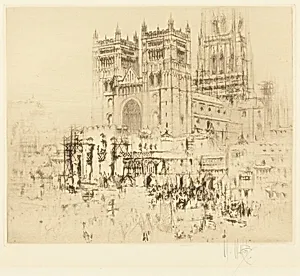
William Walcot's *Durham Cathedral* (1923) captures the majestic silhouette of one of England's most iconic medieval landmarks in a delicate etching on a modest plate measuring 16.8 × 20.2 cm. Durham Cathedral, begun in 1093, stands as a masterpiece of Norman Romanesque architecture with later Gothic additions, symbolizing the power of the medieval church. Walcot, a British artist and architect active in the early 20th century, in architectural subjects, rendering this historic structure with precision during the interwar period when interest in Britain's heritage surged. Etching in black ink allowed Walcot to achieve intricate line work and subtle tonal gradations, evoking the cathedral's stone textures and towering presence. This intaglio printmaking technique—where acid etches designs into a metal plate—lent itself perfectly to architectural detail, making fine art prints accessible beyond original sketches or paintings. Walcot's approach reflects the etching revival of the era, blending technical virtuosity with romantic reverence for Gothic splendor. Housed in the National Gallery of Art's Rosenwald Collection (Department CG-W), this print exemplifies the museum's commitment to masterful prints. Visitors can appreciate how Walcot distills centuries of history into an intimate, enduring image, inviting reflection on endurance and beauty amid modernity.