
Dying Adonis
Hendrick Goltzius, 1609
About this artwork
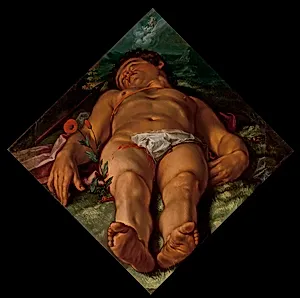
**Dying Adonis** (1609) by Hendrick Goltzius captures a poignant moment from classical mythology: the dying hunter Adonis, beloved of Venus, slain by a boar's tusk. Painted in oil on canvas in a striking square format (76. x 76.5 cm), this from the Rijksmuseum exemplifies Gzius's late-career shift from masterful printmaking to lush, painterly oils. A leading figure in Dutch Manner, Goltzius inspiration from Italian masters like Michelangelo and Correggio, infusing Northern art with dramatic Italianate flair during the early 17th century. The composition dramatically employs foreshortening to thrust Adonis's nearly nude body toward the viewer, emphasizing his mortal wound. From the flowing blood sprouts an anemone on the left—a mythological symbol of transformation, as Adonis's lifeblood births the flower. Above, Venus ascends in her swan-drawn triumphal chariot, evoking divine grief amid swirling clouds, blending pathos with celestial splendor. This intimate yet intense painting highlights oil's versatility for Goltzius's fluid modeling of flesh and light, bridging Mannerist elongation with emerging Baroque emotion. It invites visitors to ponder themes of love, mortality, and nature's cycles, a timeless reflection of Renaissance humanism in the Dutch Golden Age.