
Ear Spool
Unknown Artist
15th–early 16th century
Medium
Obsidian
Dimensions
Height 1-5/8 in.
Classification
Glass-Ornaments
Culture
Aztec
Department
Arts of Africa, Oceania, and the Americas
Museum
Metropolitan Museum of Art, New York, NY
Credit
Bequest of Arthur M. Bullowa, 1993
Accession Number
1994.35.550
Rights
Public Domain
Art Historical Context
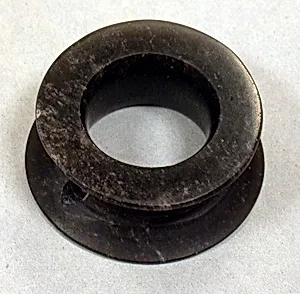
This exquisite obsidian ear spool, crafted by an unknown Aztec artist in the 15th to early 16th century hails from the height of the Aztec Empire inamerica. Measuring just 1-5/8 inches in height, this small yet striking ornament was likely worn by elites, inserted into pierced earlobes to signify status and prestige. The Aztecs, centered in the bustling city of Tenochtitlan (-day Mexico City), prized such jewelry as symbols of power and divine favor, often adorning priests, warriors, or nobles during rituals and daily life. Carved from obsidian—a naturally occurring volcanic glass renowned for its glossy black sheen and razor-sharp edges—the spool showcases the Aztecs' masterful lapidary techniques. Sourced from sacred mountains and widely traded across their empire, obsidian held both practical and spiritual value; it was used for mirrors, blades, and tools, but here it's transformed into a polished adornment. Its classification as a glass ornament underscores obsidian's glass-like properties, achieved through precise knapping and grinding without metal tools. Today, this piece from the Metropolitan Museum of Art's Arts of Africa, Oceania, and the Americas collection offers a glimpse into Aztec artistry just before the Spanish conquest in 1521. Bequeathed by Arthur M. Bullowa in 1993, it reminds us how everyday objects carried profound cultural weight in one of history's most sophisticated civilizations.