
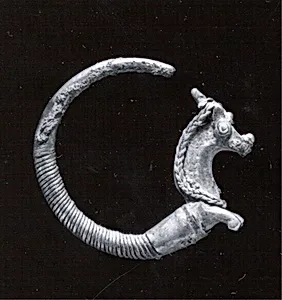
Earring
Unknown Artist
ca. 3rd–2nd century BCE
Medium
Silver
Dimensions
1.38 in. (3.51 cm)
Classification
Metalwork-Ornaments
Culture & Period
Parthian (?) · Parthian (?)
Department
Ancient Near Eastern Art
Museum
Metropolitan Museum of Art, New York, NY
Credit
Anonymous Gift, 1970
Accession Number
1970.202.3
Rights
Public Domain
Tags
Art Historical Context
This exquisite silver earring, dating to around the 3rd–2nd century BCE, hails from the Parthian culture—or possibly influenced by it—in the Ancient Near East. Measuring just 1.38 inches (3.51 cm), its petite scale highlights the finesse of ancient metalworkers who crafted delicate personal ornaments. The design prominently features horses, a motif that evokes the Parthian Empire's legendary cavalry and equestrian prowess, which helped them dominate vast territories from Iran to Mesopotamia after the fall of Alexander the Great's successors. Parthian jewelry like this earring reflects a blend of Hellenistic and local Iranian traditions, where silver was prized for its luster and workability. Techniques likely involved hammering, soldering, and intricate detailing to capture the dynamic form of horses, symbols of speed, power, and elite status. Worn by both men and women, such adornments signified wealth and cultural identity in a nomadic warrior society. Today, this anonymous gift to the Metropolitan Museum of Art offers a tangible glimpse into daily life and artistry of a pivotal era, reminding us how even small treasures carried profound cultural weight.