
Earring
Unknown Artist
7th century or earlier
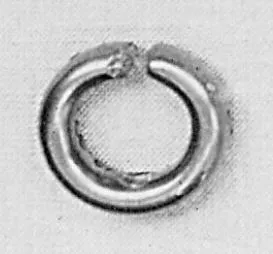
Medium
Gold plated
Dimensions
Diam. 3/4 in. (1.9 cm)
Classification
Jewelry
Culture & Period
Japan · Kofun period (ca. 300–710)
Department
Asian Art
Museum
Metropolitan Museum of Art, New York, NY
Credit
Rogers Fund, 1912
Accession Number
12.37.14
Rights
Public Domain
Art Historical Context
This delicate gold-plated earring, dating to the 7th century or earlier, hails from Japan's Kofun period (. 300–710 CE), a time of profound cultural transformation marked by the rise of powerful clans and monumental keyhole-shaped burial mounds. Discovered among elite grave goods, such earrings were likely worn by high-status individuals, symbolizing wealth and social hierarchy in a society blending indigenous traditions with continental influences from Korea and China. Crafted with impressive metallurgical skill for its era, the earring's gold plating—achieved by applying a thin layer of precious metal over a base—highlights advanced Japanese craftsmanship. Measuring just 3/4 inch (1.9 cm) in diameter, its petite scale suggests it adorned the ear subtly, perhaps in pairs for symmetry. As part of the Metropolitan Museum of Art's Asian Art collection, acquired through the Rogers Fund in 1912, this artifact offers a glimpse into Kofun daily life and adornment practices, bridging the gap between archaeology and personal expression. Though the artist remains unknown, the earring's survival in a tomb underscores the period's emphasis on afterlife provisions, inviting us to ponder the wearer's story across 1,300 years.