
Earring
Unknown Artist
7th century or earlier
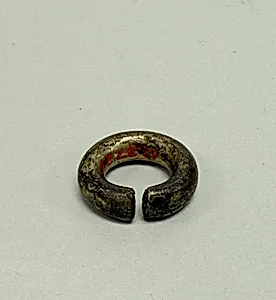
Medium
Metal plated with electrum
Dimensions
Diam. 1 1/2 in. (3.8 cm) - 2 1/8 in. (5.4 cm) for 12.37.20-25
Classification
Jewelry
Culture & Period
Japan · Kofun period (ca. 300–710)
Department
Asian Art
Museum
Metropolitan Museum of Art, New York, NY
Credit
Rogers Fund, 1912
Accession Number
12.37.22
Rights
Public Domain
Art Historical Context
These delicate earrings from Japan's Kofun period (. 300–710 CE), dating to the 7th century or earlier offer a glimpse into the lives of ancient elites. Discovered in burial contexts, they exemplify the sophisticated metalwork of this era, named for the massive keyhole-shaped tomb mounds (kofun) that dot the landscape and signal emerging social hierarchies. Acquired by The Metropolitan Museum of Art through Rogers Fund in 191, this set (accession numbers 12.37.20-25) measures 1½ to 2⅛ inches (3.8–5.4 cm) in diameter, small yet striking adornments likely worn by high-status individuals. Crafted from metal plated with electrum—an alloy of gold and silver prized for its radiant sheen—the earrings showcase advanced plating techniques that mimicked more precious materials. This electrum plating not only enhanced durability but also conveyed prestige, reflecting continental influences from Korea and China during a time of cultural exchange and technological innovation in Japan. In Kofun society, such jewelry symbolized power, ritual, and possibly gender-specific roles, often buried with the deceased to accompany them into the afterlife. For visitors, these earrings evoke the artistry of a formative era, bridging prehistoric Japan to its imperial dawn—tiny treasures that whisper of forgotten ceremonies and enduring elegance.