
Earring, delta-shaped with beads
Unknown Artist
1st century CE
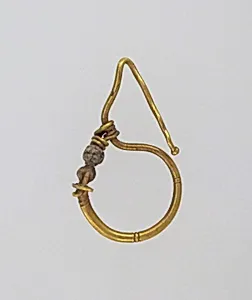
Medium
Gold, glass
Dimensions
Other: 5/8 × 1/4 × 1 1/16 in. (1.6 × 0.6 × 2.7 cm)
Classification
Gold and Silver
Culture & Period
Roman · Early Imperial
Department
Greek and Roman Art
Museum
Metropolitan Museum of Art, New York, NY
Credit
The Cesnola Collection, Purchased by subscription, 1874–76
Accession Number
74.51.3939
Rights
Public Domain
Art Historical Context
This delicate delta-shaped earring from the 1st century exemplifies the exquisite jewelry craftsmanship of the Early Imperial Roman period. Fashioned from gleaming gold adorned with colorful glass beads, it measures 5/8 × 1/4 × 1/16 inches, perfect for everyday elegance or special occasions. The triangular "delta" form, evoking the Nile Delta or protective motifs, highlights Roman artisans' skill in combining precious metals with imported glass for vibrant accents, showcasing advanced techniques like wirework and bead-setting. In Roman culture, such earrings were more than ornaments—they signified wealth, status, and cultural exchange across the empire. Gold, a symbol of imperial luxury, was often sourced from mines in distant provinces, while glass beads added affordable yet striking color, reflecting trade networks from Egypt to the Mediterranean. Worn by women (and sometimes men) at banquets or public events, pieces like this offer a glimpse into daily life under emperors like Augustus or Tiberius. Part of The Cesnola Collection at The Metropolitan Museum of Art, acquired by subscription in 1874–76, this earring bridges Greek influences on Cyprus with Roman innovation, inviting us to ponder the wearer's world of opulence and artistry.