
Earrings
Unknown Artist
1st millennium BCE (?)
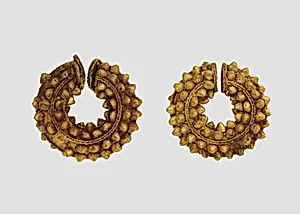
Medium
Gold
Dimensions
1.1 x 1.18 x 1.18 in. (2.79 x 3 x 3 cm)
Classification
Metalwork-Ornaments
Culture & Period
Iran · Iron Age
Department
Ancient Near Eastern Art
Museum
Metropolitan Museum of Art, New York, NY
Credit
Bequest of Lester Wolfe, 1983
Accession Number
1984.175.36a, b
Rights
Public Domain
Art Historical Context
These exquisite gold earrings, crafted in ancient Iran during the Iron Agecirca 1st millennium), offer a glimpse into the opulent world of personal adornment in the Ancient Near East. Measuring just 1.1 x 1.18 x 1.18 inches, their petite scale belies their intricate design, likely intended for daily wear or ceremonial use by elite individuals. As metalwork ornaments, they exemplify the region's advanced goldsmithing traditions, where lightweight, malleable gold was hammered, shaped, and possibly adorned with subtle textures to catch the light. Gold held profound cultural significance in Iron Age Iran, symbolizing wealth, status, and divine favor amid a period of emerging empires and trade networks linking Mesopotamia, the Levant, and Central Asia. Such earrings would have been status symbols, perhaps worn by women or warriors, reflecting social hierarchies and artistic exchange across ancient cultures. The tentative dating underscores the challenges of archaeology in this era, yet their survival highlights the enduring allure of Near Eastern craftsmanship. Now housed in the Metropolitan Museum of Art's Department of Ancient Near Eastern Art through the 1983 bequest of Lester Wolfe, these earrings invite visitors to ponder the lives of their long-ago owners—elegant tokens of a vibrant, metal-rich civilization.