
Ecce Homo
Federico Zuccaro (Zuccari), 1540/41–1609
About this artwork
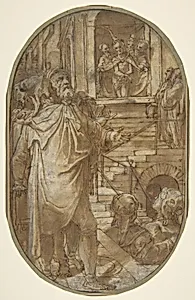
Federico Zuccaro (1540/41–1609), a prominent Italian Mannerist artist for his intricate drawings and frescoes in Rome and beyond, created this poignant *Ecce Homo*—Latin for "Behold the Mandepicting Christ presented by Pontius Pilate to the crowd during his Passion. Active in the late 16th century, Zuccaro drew inspiration from Michelangelo and the High Renaissance, blending dramatic emotion with elegant, elongated forms characteristic of Mannerism. This intimate sheet captures the suffering Savior's humanity and divinity, a popular Counter-Reformation theme emphasizing empathy and devotion. Executed in pen and brown ink with brush and brown wash, heightened with white gouache on beige paper, the drawing exemplifies virtuoso techniques of the period. These mixed media allowed artists like Zuccaro to model forms with shadow and light, creating depth on a small scale (9 7/16 x 5 7/8 inches). Such preparatory or independent studies were prized by collectors for their spontaneity and skill, bridging studio practice and connoisseurship. A treasured gift to the Metropolitan Museum of Art from Cornelius Vanderbilt in 1880, this work from the Drawings and Prints department invites visitors to ponder Christ's quiet dignity amid turmoil, reflecting the era's religious fervor and artistic innovation.