
Edgar Allen Poe
1851 to 1875
Medium
etching
Classification
Department
CG-W
Museum
National Gallery of Art, Washington, D.C.
Credit
Rosenwald Collection
Accession Number
1943.3.7421
Rights
Public Domain
Art Historical Context
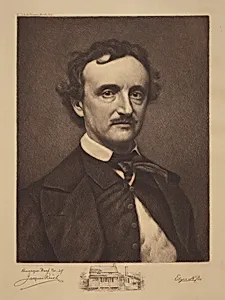
In the National Gallery of Art's Rosenwald Collection, Jacques Reich's etching *Edgar Allen Poe* (ca. 1851–1875) offers a haunting tribute to one of America's most enigmatic literary figures. Reich, a skilled 19th-century engraver known for his precise portraiture, captures Poe's intense gaze and brooding features, evoking the writer's reputation for tales of mystery and the macabre. Produced posthumously after Poe's death in 9, this print reflects the growing cult of personality around the poet during the mid-19th century, when his works like *The Raven* were cementing his legacy. Etching, Reich's chosen medium, exemplifies the technical virtuosity of printmaking. By scratching lines into a wax-coated copper plate and immersing it in acid, artists like Reich could achieve intricate, velvety textures and subtle tonal gradations impossible in painting. This allowed for affordable dissemination of portraits, making cultural icons accessible to a wider audience amid the era's print boom. Housed in the museum's CG-W department, this work not only showcases Reich's mastery but also bridges literature and visual art, inviting visitors to ponder Poe's enduring influence on Gothic imagination and American Romanticism. A subtle yet powerful piece, it reminds us how prints preserved the faces of genius for generations.