
Edging
Unknown Artist
18th century
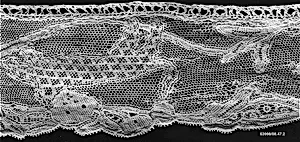
Medium
Bobbin lace
Dimensions
L. 27 x W. 1 1/2 inches (68.6 x 3.8 cm)
Classification
Textiles-Laces
Culture
Flemish, possibly Brussels
Department
European Sculpture and Decorative Arts
Museum
Metropolitan Museum of Art, New York, NY
Credit
Gift of Mrs. James Boorman Johnston, 1908
Accession Number
08.47.2
Rights
Public Domain
Art Historical Context
This delicate bobbin lace edging, crafted in the 18th century an unknown Flemish artist—possibly from Brussels—exemplifies the pinnacle of European lace-making artistry. Measuring a slender 27 by 1.5 inches, it was designed as a decorative trim for garments, linens, or furnishings, showcasing the era's obsession with intricate ornamentation. Housed in the Metropolitan Museum of Art's Department of European Sculpture and Decorative Arts since a 1908 gift from Mrs. James Boorman Johnston, this piece highlights the technical mastery of Flemish lacemakers. Bobbin lace, the medium here, involves weaving fine threads with handheld bobbins over a patterned pillow, creating a durable yet ethereal fabric prized for its precision and floral motifs. In 18th-century Flanders, particularly Brussels, lace was a luxury export, adorning royalty and the elite. Its production supported thriving workshops, blending artistry with commerce and elevating textiles to high art. Today, this edging invites us to appreciate the anonymous skill behind everyday elegance, a testament to how decorative arts wove beauty into daily life. Visitors can marvel at its preserved intricacy, a window into Baroque-era refinement.