
Edging
Unknown Artist
early 19th century
Medium
Bobbin lace
Dimensions
L. 29 x W. 2 3/8 inches (73.7 x 6.0 cm)
Classification
Textiles-Laces
Culture
French
Department
European Sculpture and Decorative Arts
Museum
Metropolitan Museum of Art, New York, NY
Credit
Gift of Henry Livingston Lee, through his daughter, Mrs. F. S. Crofts, 1931
Accession Number
31.31.4
Rights
Public Domain
Tags
Art Historical Context
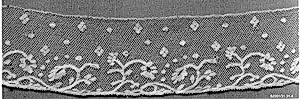
This delicate bobbin lace edging, crafted in France during the early 19th century exemplifies the exquisite textile arts of the Napoleonic era. Measuring 29 inches long and just 2⅜ inches wide, this narrow strip was likely designed as a decorative trim for garments, linens, or furnishings, its floral motifs—evident in the intricate blooming patterns—evoking the romantic naturalism popular in European decorative design at the time. Bobbin lace, a labor-intensive technique, involves dozens of threads wound on small bobbins, which are twisted and plaited over a patterned pillow to create fine, openwork patterns. French lacemakers, centered in regions like Normandy and the Loire Valley, were renowned for their precision and innovation, elevating lace from mere utility to high fashion and status symbol. This piece reflects that mastery, showcasing the patience required to weave such gossamer threads into enduring beauty. A generous gift to The Metropolitan Museum of Art in 1931 from Henry Livingston Lee via his daughter, this anonymous artwork preserves a slice of everyday elegance from two centuries past, reminding us how textiles wove artistry into the fabric of daily life.