
狩野常信筆 潇湘八景図巻|Eight Views of the Xiao and Xiang Rivers
late 17th–early 18th century
Medium
Handscroll; ink and color on silk
Dimensions
12 3/4 in. × 16 ft. 1 1/4 in. (32.4 × 490.9 cm)
Classification
Paintings
Culture & Period
Japan · Edo period (1615–1868)
Department
Asian Art
Museum
Metropolitan Museum of Art, New York, NY
Credit
Purchase, Fletcher Fund and J. Pierpont Morgan Gift, 1926
Accession Number
26.146
Rights
Public Domain
Tags
Art Historical Context
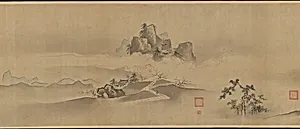
Immerse yourself in the serene beauty of *Eight Views of the Xiao Xiang Rivers*, a masterful handscroll by Kano Tsunenobu, a leading artist of Japan's Kano school during the late 17th early 18th century period (1615–1868). This 16-foot silk scroll, painted in vibrant ink and color, captures iconic landscapes from China's Hunan province—familiar subjects in East Asian art symbolizing the fleeting nature of life and Zen contemplation. Tsunenobu, part of the official Kano lineage favored by shoguns, adapted these timeless Chinese motifs with the school's signature bold outlines, rich pigments, and dynamic compositions. Unfurl the scroll slowly, as intended for private viewing among literati, to reveal misty mountains, tranquil rivers, and thatched pavilions evoking solitude and harmony. The elongated format (12¾ × 490.9 cm) allows a narrative journey through scenes like "Evening Bells at a Distant Temple" or "Sailing on a Calm River," blending meticulous detail with atmospheric washes—a technique blending Chinese literati ink traditions with Kano exuberance. Housed in the Metropolitan Museum of Art's Asian Art collection since 1926, this work exemplifies Edo Japan's cultural flourishing, where imported Chinese themes fueled innovative Japanese landscapes. It's a window into how art transcended borders, inviting reflection amid nature's grandeur.
About the Artist
Kano Tsunenobu (Japanese) · 1636 –1713
Japanese, 1636–1713