
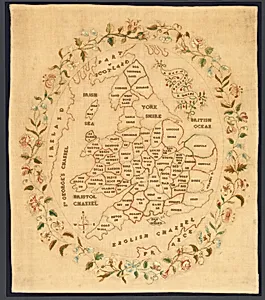
Embroidered map sampler
Unknown Artist
1835
Medium
Silk embroidery on wool
Dimensions
H. 22 1/2 x W. 19 1/4 inches (57.2 x 48.9 cm)
Classification
Textiles-Embroidered
Culture
British
Department
European Sculpture and Decorative Arts
Museum
Metropolitan Museum of Art, New York, NY
Credit
Gift of Livingston Parsons and Katharine de B. Parsons, 1941
Accession Number
41.27.8a
Rights
Public Domain
Tags
Art Historical Context
This charming embroidered map sampler, created in Britain in 1835, exemplifies the educational and decorative needlework traditions of the early Victorian era. Crafted by an unknown artist—likely a young woman or girl honing her skills— it measures 22½ x 19¼ inches and features meticulously stitched silk threads on a wool. The design incorporates detailed maps alongside floral motifs, blending geographical knowledge with ornamental beauty, as suggested by its tags for flowers and maps. Samplers like this were staples in British households, serving as both skill-building exercises and personal accomplishments. Girls as young as eight would embroider alphabets, verses, maps, and motifs to demonstrate proficiency in stitches such as satin, chain, and stem, preparing them for domestic life. The silk-on-wool medium allowed for vibrant colors and fine detail, highlighting the artistry in everyday textiles. Housed in the Metropolitan Museum of Art's European Sculpture and Decorative Arts Department since a 1941 gift from Livingston and Katharine de B. Parsons, this piece offers a window into 19th-century cultural values: education, femininity, and the fusion of utility with aesthetics. It's a delightful testament to the unsung creativity of anonymous makers.