
Emperor Maximilian II
1574
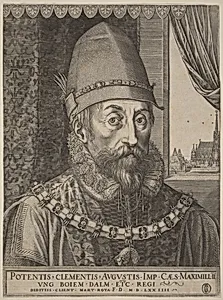
Medium
engraving
Dimensions
sheet (trimmed to plate mark): 20.9 x 15.5 cm (8 1/4 x 6 1/8 in.)
Classification
Department
CG-E
Museum
National Gallery of Art, Washington, D.C.
Credit
Rosenwald Collection
Accession Number
1943.3.7540
Rights
Public Domain
Art Historical Context
Behold the striking portrait *Emperor Maximilian II an engraving crafted by Martino Rota in 1574. This sheet, measuring just 20.9 x 15.5 cm, the Holy Roman Emperor during the final years of his reign (1564–1576). Rota, a skilled Venetian printmaker of the late Renaissance, renders Maximilian with regal poise, likely on the era's fascination with authoritativees to propagate imperial power across Europe. Engravings like this were revolutionary in the 16th century, allowing precise reproductions of portraits that could be widely disseminated through books, pamphlets, and collections. The medium's fine lines and tonal depth—achieved through Rota's burin work on copper plates—convey texture and depth on a small scale, making imperial grandeur accessible beyond court circles. Maximilian II, a Habsburg ruler known for his tolerant religious policies amid Reformation tensions, symbolizes a pivotal moment in European politics. Housed in the National Gallery of Art's Rosenwald Collection (Department CG-E), this print exemplifies the artistry of Renaissance printmaking. Visitors can appreciate how such works bridged painting and mass media, preserving the emperor's visage for history. A testament to Rota's mastery, it invites us to ponder the interplay of power, portraiture, and print in the 1570s.