
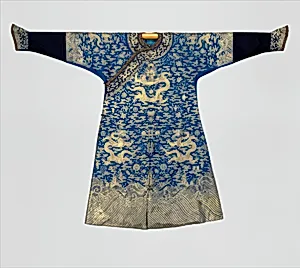
清乾隆 刺繡御用十二章吉服袍|Emperor’s twelve-symbol festival robe
Unknown Artist
Medium
Silk and gold and silver thread embroidery on silk twill
Dimensions
Overall: 56 5/8 x 63 1/2 in. (143.8 x 161.3 cm)
Classification
Costumes-Embroidered
Culture & Period
China · Qing dynasty (1644–1911)), Qianlong period (1736–95)
Department
Asian Art
Museum
Metropolitan Museum of Art, New York, NY
Credit
Gift of Lewis Einstein, 1954
Accession Number
54.14.2
Rights
Public Domain
Tags
Art Historical Context
This exquisite Emperor’s Twelve-Symbol Festival Robe, from China’s Qing dynasty during the Qianlong reign (1736–1795), represents the pinnacle of imperial splendor. Reserved exclusively for the emperor on ceremonial occasions, such robes embodied cosmic authority and divine mandate. The twelve traditional symbols—star constellations, sun and moon, mountains, paired dragons, fu (winged creatures), and others—were mandated by imperial decree, adorning the front and back to signify the ruler’s harmony with heaven and earth. Dragons, a key motif here, evoked the emperor’s supreme power and protection. Crafted from luxurious silk twill and embroidered with shimmering gold and silver threads, the robe showcases advanced Qing textile techniques like satin stitch and couching, which allowed for intricate, raised designs that caught the light during rituals. Measuring over five feet square, its scale underscores its role in grand processions. A gift to the Metropolitan Museum of Art in 1954, this rare survivor offers visitors a tangible link to Qianlong’s prosperous era, when court workshops produced unparalleled luxury goods blending artistry, symbolism, and political ideology.