
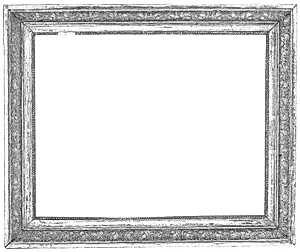
Empire frame
Unknown Artist
1815–20
Medium
Pine
Dimensions
Overall: 20 1/2 × 24 11/16 in. (52 × 62.7 cm) Sight: 15 9/16 × 17 11/16 in. (39.5 × 45 cm) Rabbet: 16 3/8 × 20 1/2 in. (41.6 × 52 cm)
Classification
Frames
Culture
British
Department
Robert Lehman Collection
Museum
Metropolitan Museum of Art, New York, NY
Credit
Robert Lehman Collection, 1975
Accession Number
1975.1.2288
Rights
Public Domain
Art Historical Context
Step into the elegant world of Regency-era Britain with this striking *Empire frame*, crafted from pine around 1815–20 by an unknown artist. Dating to the immediate aftermath of the Napoleonic Wars, it exemplifies the Empire style—a bold neoclassical aesthetic inspired by ancient Egyptian, Greek, and Roman motifs, popularized by Napoleon's decorators and adapted across Europe. In Britain, such frames adorned portraits and landscapes in grand homes, enhancing the grandeur of oil paintings with their architectural presence. Made of pine, a lightweight yet sturdy wood ideal for ornate carving, this frame measures 20½ × 24⅞ inches overall, with a sight opening of 15⁹/₁₆ × 17¹¹/₁₆ inches—dimensions suited to standard canvases of the period. The rabbet (inner edge) at 16⅜ × 20½ inches reveals precise joinery techniques, ensuring a secure fit. Empire frames like this often featured geometric moldings, anthemions, and laurel motifs, underscoring the era's fascination with imperial symmetry and revivalist opulence. Now part of the Robert Lehman Collection at The Metropolitan Museum of Art (acquired 1975), this British treasure highlights frames as artworks in their own right. Far from mere supports, they framed cultural narratives, reflecting taste and status in early 19th-century salons. A testament to understated craftsmanship, it invites us to appreciate the unsung heroes of display.