
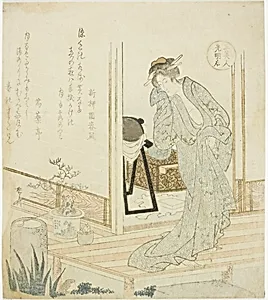
Empress Komyo (Komyoko), from the series "Three Beautiful Women (San bijin)"
c. 1820
Medium
Color woodblock print; shikishiban, surimono
Dimensions
21 × 18.5 cm (8 5/16 × 7 5/16 in.)
Classification
woodblock print
Department
Arts of Asia
Museum
Art Institute of Chicago
Accession Number
81349
Rights
Public Domain
Art Historical Context
This exquisite color woodblock print by Ryuryukyo Shinsai, created around 1820, depicts Empress Komyo as part of the series "Three Beautiful Women." Measuring just 21 by 18.5 centimeters, the work belongs to the refined tradition of surimono—privately commissioned prints often produced in small editions for poetry circles and special occasions. The square shikishiban format and meticulous printing techniques highlight the luxurious quality typical of these pieces, which frequently incorporated metallic pigments, embossing, and delicate details to elevate them beyond ordinary commercial prints. Shinsai worked during Japan’s Edo period, when ukiyo-e artists explored themes of beauty, history, and literature. Empress Komyo, a revered eighth-century figure celebrated for her grace and compassion, embodies an ideal of feminine elegance drawn from classical Japanese history. By presenting her in this intimate format, the print connects viewers to a shared cultural heritage while showcasing the artist’s skill in capturing subtle expressions and flowing garments. As a surimono, the work likely originally accompanied verses by contemporary poets, blending visual art with literary appreciation. Today it offers museum visitors a glimpse into the sophisticated tastes of early nineteenth-century Japanese society, where prints served both as personal treasures and quiet celebrations of beauty and tradition.