
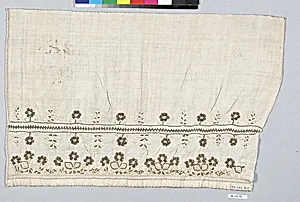
End of a cover
Unknown Artist
late 18th–early 19th century
Medium
Linen and silk
Dimensions
17 x 12 in. (43.2 x 30.5 cm)
Classification
Textiles-Embroidered
Culture
Hungarian, Slovakia (South Netra)
Department
European Sculpture and Decorative Arts
Museum
Metropolitan Museum of Art, New York, NY
Credit
Gift of Countess Thérèse Pálffy, 1908
Accession Number
08.192.4a
Rights
Public Domain
Art Historical Context
This delicate "End of a Cover," by an unknown artist in the late 18th to early 19th century, hails from the South Netra region of what is now Slovakia, reflecting Hungarian cultural traditions under Habsburg influence. Measuring a modest 17 x 12 inches, it likely formed part of a larger household textile, such as a bed or tablecloth, essential to everyday life and special occasions in rural Central Europe. During this era of transition from Enlightenment to Romanticism, such embroidered pieces preserved folk artistry amid growing industrialization. Woven from linen and silk and classified as an embroidered textile, the work showcases masterful needlework techniques typical of the region—intricate stitching that blended durability with beauty. Silk accents would have added luster and value, highlighting the skill of local women who often created these as dowry items or family heirlooms. These textiles embodied cultural identity, with patterns (though not specified here) echoing motifs of nature, faith, and community that defined Slovak-Hungarian peasant life. A generous gift to the Metropolitan Museum of Art from Countess Thérèse Pálffy in 1908, this piece now resides in the European Sculpture and Decorative Arts department. It invites us to appreciate the unsung artistry of anonymous makers, bridging domestic craft with museum-worthy heritage.