
Engraved Bowl
Unknown Artist
early 17th century
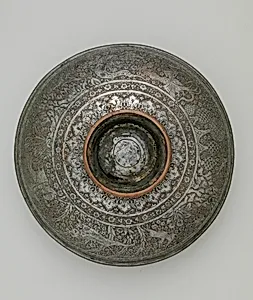
Medium
Copper; cast, engraved, tinned, and inlaid with a black compound
Dimensions
H. 5 in. (12.7 cm) Diam. 10 3/4 in. (12.7cm)
Classification
Metal
Department
Islamic Art
Museum
Metropolitan Museum of Art, New York, NY
Credit
Purchase, Patti Cadby Birch Gift, funds from various donors, and W. Graham Arader III Gift, 2009
Accession Number
2009.484
Rights
Public Domain
Tags
Art Historical Context
This exquisite engraved bowl, crafted by an unknown artist in the 17th century, hails from the Islamic world and exemplifies the masterful metalworking traditions of the period. Made of copper that was cast, meticulously engraved, tinned for a silvery sheen, and inlaid a striking black compound—likely a form of niello for contrast—the bowl measures 5 inches high and 10¾ inches in diameter. Now housed in the Metropolitan Museum Art's Department of Islamic Art, it the technical virtuosity of artisans who blended functionality with opulent decoration. The bowl's surface bursts with dynamic engravings of hunting scenes: men on horseback pursuing birds, capturing the thrill of the chase in intricate detail. Such motifs were popular in Safavid Persia or Ottoman realms, symbolizing nobility, prowess, and the harmony between humans and nature in courtly life. The tinned surface protected the copper while enhancing its luster, making it ideal for both practical use and display at elite gatherings. As a testament to Islamic metalwork's golden age, this bowl invites us to ponder the skilled hands behind its creation—artisans whose anonymous genius turned everyday objects into treasures of cultural prestige.