
Ennion Williams
Charles Willson Peale, 1776
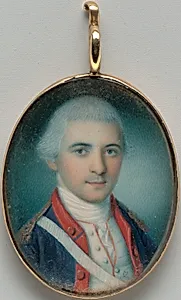
About this artwork
In the turbulent year of 1776, as America declared its independence, Charles Willson Peale this exquisite miniature portrait ofEnnion Williams*. Measuring just 1 1/2 x 1 1/8 inches, the watercolor on ivory captures the sitter—a man of evident dignity—in intimate detail, perfect for wearing as a locket or brooch. Peale, a Founding Father of American portraiture and patriot who painted George Washington and other revolutionaries, excelled in these tiny gems, blending European miniaturist traditions with colonial realism. The medium of watercolor on ivory was prized for its luminous translucency, allowing Peale to achieve subtle skin tones and expressive eyes with fine brushes and layered glazes. Miniatures like this served as portable mementos, conveying status, affection, or remembrance amid wartime uncertainties. This work exemplifies early American ingenuity, adapting aristocratic European forms to a burgeoning nation's identity. Now in the Metropolitan Museum of Art's American Wing, thanks to the Dale T. Johnson Fund, *Ennion Williams* invites us to ponder ordinary lives in extraordinary times— a quiet testament to resilience and artistry on the eve of revolution.