
Ensemble
Unknown Artist
19th century
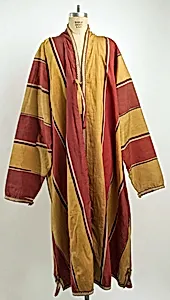
Medium
Silk
Dimensions
Robe (a): H. 57 in. (144.8 cm) W. 82 1/4 in. (208.9 cm) Girdle (b): H. 70 1/4 in. (178.4 cm) W. 2 1/4 in. (5.7 cm) D. 3/4 in. (1.9 cm) Cap (c): H. 5 1/2 in. (15 cm) W. 8 in. (20.3 cm) D. 8 in. (20.3 cm) Cloth (d): H. 48 in. (121.9 cm) W. 35 in. (88.9 cm)
Classification
Main dress-Menswear
Department
Islamic Art
Museum
Metropolitan Museum of Art, New York, NY
Credit
Gift of Irene Lewisohn and Alice Lewisohn Crowley, 1939
Accession Number
C.I.39.91.35a–d
Rights
Public Domain
Art Historical Context
This exquisite 19th-century silk ensemble from the Islamic world represents a complete man's outfit, comprising a flowing robe (57 inches high), a slender girdle (over 70 inches long), structured cap, and a rectangular cloth, likely used as a shawl or turban wrap. Crafted from luxurious silk—a prized material in Islamic textile traditions—these garments showcase the era's masterful weaving techniques, where fine threads created lightweight yet opulent fabrics ideal for layered dressing in varied climates. In the 19th century, such ensembles held profound cultural significance in regions like the Ottoman Empire or Persia, symbolizing status, piety, and refinement among elite men. The robe's generous proportions (over 82 inches wide when laid flat) allowed for dramatic draping, while the girdle cinched the waist for both practicality and elegance. Caps and cloths often denoted social roles or regional identities, blending functionality with artistry. Generously donated to The Metropolitan Museum of Art in 1939 by sisters Irene Lewisohn and Alice Lewisohn Crowley, this ensemble offers visitors a tangible glimpse into Islamic sartorial splendor, highlighting how clothing wove together daily life, trade, and tradition.