
Ensemble
Unknown Artist
ca. 1906
Medium
Silk
Dimensions
(a): 71 1/4 × 62 in. (181 × 157.5 cm) (b): 64 1/8 × 54 3/4 in. (162.9 × 139.1 cm) (c): 13 ft. 3 5/8 in. × 12 5/8 in. (405.4 × 32.1 cm) (d): 4 × 10 1/2 in. (10.2 × 26.7 cm) (e): 4 × 10 1/2 in. (10.2 × 26.7 cm) (f): 5 1/2 × 4 × 10 3/8 in. (14 × 10.2 × 26.4 cm) (g): 5 1/2 × 4 × 10 3/8 in. (14 × 10.2 × 26.4 cm)
Classification
Main dress-Womenswear
Culture
Japan
Department
Asian Art
Museum
Metropolitan Museum of Art, New York, NY
Credit
Gift of Mrs. David J. Colton, 1961
Accession Number
C.I.61.2a–g
Rights
Public Domain
Tags
Art Historical Context
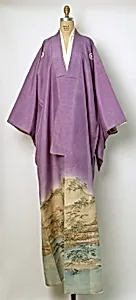
This exquisite silk *Ensemble* from Japan, dating to around 1906, offers a glimpse into the refined world of early Taishō-era womenswear. Comprising multiple components—including expansive robes measuring over five feet in length, a long sash-like obi, and delicate accessories—this outfit exemplifies the layered sophistication of traditional Japanese attire. Gifted to the Metropolitan Museum Art in 1961, it reflects the artistry of anonymous craftspeople who blended functionality with aesthetic splendor during a time of cultural transition between Meiji modernization and enduring traditions. Crafted entirely from luxurious silk, the ensemble likely features intricate landscape motifs, a hallmark of Japanese textile design that evokes the beauty of nature—rolling hills, serene waters, and misty horizons. These patterns, achieved through sophisticated dyeing or weaving techniques, transformed clothing into wearable poetry, symbolizing harmony with the environment. The generous dimensions allowed for the dramatic drape and movement essential to kimono-style garments, making the wearer a living canvas. Culturally, such ensembles held profound significance, worn for formal occasions to convey status and seasonal poetry. This piece invites visitors to appreciate how silk's shimmering quality captured light and shadow, much like a painted scroll, bridging fashion, art, and philosophy in imperial Japan.