
Entombment of Christ
model ca. 1498–1500 (possibly cast 17th century)
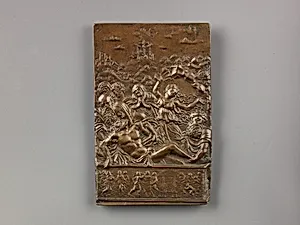
Medium
Copper alloy with warm brown patina.
Dimensions
9.7 x 6.2 cm, wt. 117.2 g.
Classification
Plaquettes
Department
Robert Lehman Collection
Museum
Metropolitan Museum of Art, New York, NY
Credit
Robert Lehman Collection, 1975
Accession Number
1975.1.1349
Rights
Public Domain
Tags
Art Historical Context
In the intimate world of Renaissance plaquettes—small, collectible relief sculptures—this *Entombment of Christ* by Galeazzo Mondella known as Moderno, stands out as a masterful example. Crafted from copper alloy with its warm brown patina, 9.7 x 6.2 cm plaque (weighing just 117. g) captures the poignant moment when Christ's body is lowered into tomb, with the grieving Virgin Mary at the center. Dating to a model from around 1498–1500 (possibly cast in the 17th century), it reflects the devotional art of late 15th-century Italy, where such scenes evoked deep spiritual contemplation. Moderno, a pioneering artist from Verona who worked in Mantua and Rome, elevated plaquettes from mere medals to sophisticated artworks. His high-relief technique, influenced by classical antiquity and contemporary painting, allowed for dramatic depth and emotional expressiveness in a portable format. These pieces were prized by collectors for their affordability compared to larger sculptures, bridging the gap between sculpture, printmaking, and jewelry. Housed in the Metropolitan Museum of Art's Robert Lehman Collection since 1975, this plaquette exemplifies the Renaissance fascination with sacred narratives. Its subtle patina enhances the lifelike quality, inviting visitors to ponder the humanity of Christ's Passion in a remarkably personal scale.
About the Artist
Moderno (Galeazzo Mondella) · 1467–1528
Moderno, identified by scholars as the goldsmith and medallist Galeazzo Mondella (c. 1467–c. 1528), was among the most gifted Italian artists working in small-scale bronze and lead relief at the turn of the sixteenth century. The pseudonym Moderno, meaning simply "the modern one," signals both the esteem in which his contemporaries held his work and his own conscious alignment with the revival of ...