
Entrance to a Village
ca. 1665
Medium
Oil on wood
Dimensions
29 1/2 x 43 3/8 in. (74.9 x 110.2 cm)
Classification
Paintings
Department
European Paintings
Museum
Metropolitan Museum of Art, New York, NY
Credit
Bequest of Benjamin Altman, 1913
Accession Number
14.40.614
Rights
Public Domain
Tags
Art Historical Context
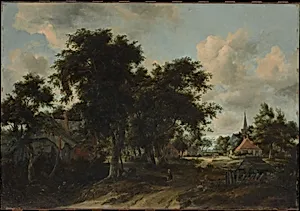
Meyndert Hobbema's *Entrance to a Village* (ca. 1665) captures the quiet charm of rural Dutch life during the Golden Age. Painted in oil on wood—a favored medium for its smooth surface and portability—this landscape depicts a sun-dappled path leading into a modest village, framed by houses and lush foliage. Hobbema, a master of the Dutch Baroque tradition and pupil of Jacob van Ruisdael, excelled in these intimate scenes, emphasizing everyday realism over grandeur. The artwork's significance lies in its meticulous detail and masterful use of light, which draws the viewer's eye along winding roads toward distant hamlets, evoking a sense of peaceful exploration. Hobbema's style reflects the 17th-century Dutch fascination with their prosperous homeland, celebrating humble villages as symbols of national identity amid economic and cultural flourishing. Now housed in the Metropolitan Museum of Art through the bequest of Benjamin Altman in 1913, this 29½ × 43⅜-inch panel invites visitors to linger, appreciating how Hobbema transformed ordinary scenery into poetic harmony. A testament to Dutch landscape innovation, it reminds us of art's power to preserve fleeting moments of tranquility.