
Epitaph for the Indian Monk Amogavajra (705-774)
Unknown Artist
20th century
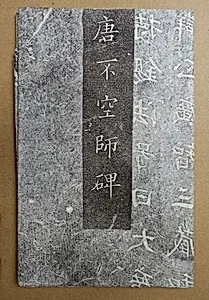
Medium
Ink on paper
Dimensions
Image: 78 3/8 × 36 3/4 in. (199.1 × 93.3 cm)
Classification
Rubbing
Culture
China
Department
Asian Art
Museum
Metropolitan Museum of Art, New York, NY
Credit
Seymour and Rogers Funds, 1977
Accession Number
1977.375.20
Rights
Public Domain
Art Historical Context
This striking ink rubbing on paper preserves the epitaph of Amogavajra (705–774), an influential Indian monk who played a pivotal role in transmitting Esoteric Buddhism to Tang-dynasty China. As of the era’s most translators and ritual masters, Amogavajra helped integrate tantric practices into Chinese court life, leaving a lasting mark on East Asian Buddhist traditions. Created in the twentieth century from an earlier stone inscription, the work exemplifies the Chinese practice of rubbings—pressing damp paper onto carved surfaces and applying ink to capture text and imagery with remarkable fidelity. Measuring nearly six-and-a-half feet tall, the composition showcases the elegant, rhythmic brushwork typical of Tang-dynasty calligraphy while serving as both historical record and devotional object. Rubbings like this one have long functioned as accessible means of preserving fragile stone monuments, allowing scholars and devotees to study ancient scripts and commemorate spiritual figures across generations. Housed in the Metropolitan Museum’s Asian Art collection, the piece highlights the enduring dialogue between India and China through Buddhist transmission and the artistry of reproduction itself.