
Epitaph of Rubens
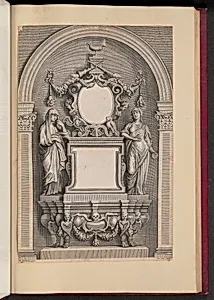
Medium
engraving on laid paper [proof before letters]
Classification
Department
CG-E
Museum
National Gallery of Art, Washington, D.C.
Credit
William B. O'Neal Fund
Accession Number
1996.78.10
Rights
Public Domain
Art Historical Context
This engraving, created by Petrus Clet after a design by the celebrated Flemish Sir Peter Paul Rubens, a window into the artistic world of the Baroque. Produced between 3 and 1646 as proof before letters—an early lacking the final text inscriptions—this print on laid paper captures the dramatic energy and rich detail characteristic of Rubens’s compositions. As an engraving, it transforms painter’s dynamic vision into a reproducible medium, allowing broader audiences to appreciate his work beyond the original canvas. Engravings like this played a vital role in disseminating art across Europe during the 17th century, when prints served both as affordable artworks and as records of major compositions. Clouet’s careful translation of Rubens’s style highlights the technical skill required to convey movement, light, and emotion through incised lines on metal plates. The “Epitaph of Rubens” title suggests a commemorative purpose, reflecting the deep admiration for the artist who died in 1640 and whose influence continued to shape European art for generations. Housed in the National Gallery of Art’s collection through the William B. O’Neal Fund, this impression invites viewers to consider the collaborative nature of printmaking and its lasting contribution to preserving artistic legacies.