
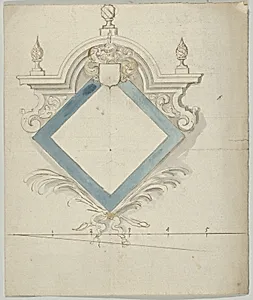
Epitaph with Lozenge-Shaped Panel
ca. 1683
Medium
Pen and ink with watercolor, wash and gilding
Dimensions
Sheet: 8 1/4 × 6 7/8 in. (20.9 × 17.5 cm)
Classification
Drawings|Ornament & Architecture
Department
Drawings and Prints
Museum
Metropolitan Museum of Art, New York, NY
Credit
Frits and Rita Markus Fund, 2014
Accession Number
2014.658.12
Rights
Public Domain
Tags
Art Historical Context
This delicate Flemish drawing, titled *Epitaph with Loge-Shaped Panel* created around 1683 by an anonymous artist, captures the ornate funerary art of the late Baroque era in the Spanish Netherlands. Epitaphs like this served as memorial inscriptions on tombs or monuments, often featuring heraldic lozenge shapes—diamond forms traditionally used for women's coats of arms or commemorative panels. Housed in the Metropolitan Museum of Art's Drawings and Prints department, this sheet (8 1/4 × 6 7/8 in.) exemplifies the meticulous preparatory sketches used by architects and designers for stone carvings or memorials. Crafted with pen and ink, watercolor, wash, and gilding, the work showcases Flemish mastery of mixed media to evoke stone's texture and gold's luminescence. The fine lines and subtle washes suggest architectural depth, while gilding highlights decorative flourishes, bridging drawing and sculpture. In a time of Catholic Counter-Reformation fervor, such designs reflected Flanders' rich tradition of elaborate church monuments honoring the deceased. As a rare survivor of 17th-century ornament and architecture drafts, it offers insight into everyday artistic practices, blending piety, heraldry, and opulent detail for eternal remembrance. Visitors will appreciate its intimate scale and gilded glow, a window into Baroque devotion.