
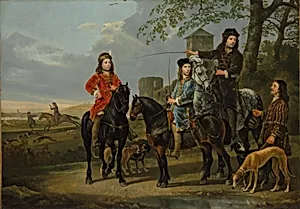
Equestrian Portrait of Cornelis (1639–1680) and Michiel Pompe van Meerdervoort (1638–1653) with Their Tutor and Coachman
Aelbert Cuyp, ca. 1652–53
About this artwork
In the heart of the Dutch Golden Age, Ael Cuyp captures the youthful vigor and social status of brothers Cornelis and Michiel van Meerdervoort this grand equestrian portrait from around 1652–53. The two boys, aged about 13 and 14, are depicted astride elegant horses, flanked by their tutor and coachman, with loyal dogs at their heels—symbols of affluence, education, and pursuits like hunting. Cuyp, a master from Dordrecht, elevates this family commission into a luminous celebration of 17th-century burgher life, where merchant prosperity rivaled nobility. Cuyp's oil on canvas, measuring over five feet wide, showcases his signature style: a warm, golden light bathing the figures and animals in a serene, atmospheric glow reminiscent of Italian landscapes. This realistic yet idealized rendering of horses—shiny coats, alert postures—highlights his expertise in animal portraiture, blending portraiture with pastoral elements for dynamic composition. The expansive format underscores the sitters' importance, a technique common in equestrian portraits to convey power and lineage. Housed in The Metropolitan Museum of Art's European Paintings department from the Friedsam Collection, this work reflects the era's cultural shift toward secular portraiture, immortalizing fleeting youth amid the Dutch Republic's economic boom. Tragically, both brothers died young, adding poignant depth to Cuyp's timeless depiction of privilege and promise.