
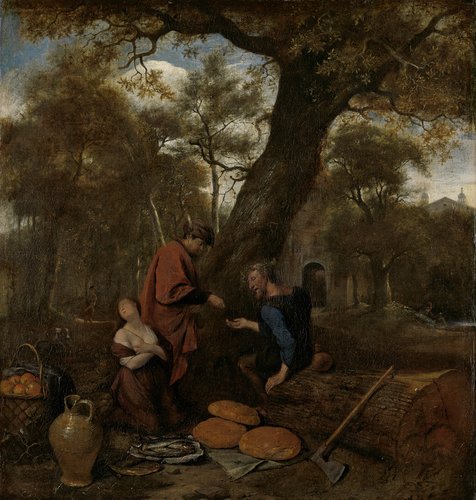
Erysichthon verkoopt zijn dochter Mestra
1650 - 1660
Medium
oil on canvas
Dimensions
7.5; 64; 66
Rights
Public Domain
About this artwork
signature: ‘JSteen’
Art Historical Context
Jan Havicksz. Steen’s *Erysichthon verko zijn dochter Mestra*Erysichthon Sells His Daughter Mestra painted between 1650 and 1660, captures a vivid mythological moment in the lively style of the Dutch Golden Age. Signed with the artist’s distinctive “JSteen,” this oil canvas (66 × 64 cm) exemplifies’s mastery of genre painting, where classical tales from Ovid’s *Metamorphoses* are reimagined through the lens of everyday 17th-century Dutch life Erysichthon, by Demeter with insatiable hunger after felling her sacred tree, desperately sells his shape-shifting daughter Mestra to sustain himself—a poignant allegory of greed and folly. Steen, a leading figure in Leiden’s art scene, infused his works with humor, moral lessons, and bustling domestic details, blending high mythology with lowbrow tavern-like realism. Oil on canvas allowed him to layer glazes for luminous skin tones and rich fabrics, drawing viewers into intimate, theatrical compositions. This technique highlighted human folly amid prosperity, resonating with Dutch audiences navigating Calvinist ethics and economic abundance. Housed in the Rijksmuseum, this compact yet dynamic piece underscores Steen’s rare forays into myth, bridging ancient lore with relatable burgher drama. It invites reflection on timeless vices, making classical stories feel strikingly modern.