
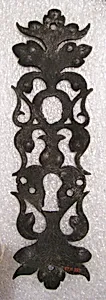
Escutcheon
Unknown Artist
1580–1620
Medium
Iron
Dimensions
Overall: 7 × 2 in. (17.8 × 5.1 cm)
Classification
Metalwork-Iron
Culture
German or Swiss
Department
European Sculpture and Decorative Arts
Museum
Metropolitan Museum of Art, New York, NY
Credit
Gift of Henry G. Marquand, 1887
Accession Number
87.11.383
Rights
Public Domain
Art Historical Context
This modest yet masterful iron escutcheon, from 1580–1620 hails from German or Swiss workshops during the late Renaissance. Measuring just 7 × 2, it exemplifies the metalwork of the Alpine regions, where skilled smiths crafted durable, ornamental pieces for everyday use. Likely a shield-shaped plate for a door or furniture, its form draws from traditions, evoking coats of that symbolized family pride and status in early modern Europe. Forged from iron—a resilient medium prized for its strength and malleability—the escutcheon showcases the era's advanced blacksmithing techniques. Artisans hammered and chiseled the metal into intricate, pierced designs, balancing functionality with subtle decoration. Such objects were integral to burgher homes and public buildings, blending utility with regional flair amid the Protestant Reformation's cultural shifts in Germanic lands. Today, this anonymous gem graces the Metropolitan Museum of Art's European Sculpture and Decorative Arts collection, a gift from Henry G. Marquand in 1887. It invites us to appreciate the unsung artistry of metalworkers, whose handiwork endured centuries, whispering tales of craftsmanship in a pre-industrial age.