
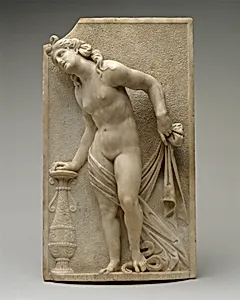
Eurydice
1515–ca. 1524
Medium
Marble
Dimensions
Overall: 14 7/8 × 8 5/8 in., 14.5 lb. (37.8 × 21.9 cm, 6.6 kg)
Classification
Sculpture
Culture
Italian, Padua
Department
European Sculpture and Decorative Arts
Museum
Metropolitan Museum of Art, New York, NY
Credit
Gift of J. Pierpont Morgan, 1917
Accession Number
17.190.737
Rights
Public Domain
Tags
About this artwork
This marble, created in 1515–ca. 1524, represents significant artistic achievement by Circle of Antonio Lombardo, a artist. The piece demonstrates the technical capabilities and aesthetic conventions of art during this historical period. Working in marble, the artist employed materials and techniques characteristic of the era, creating visual effects that convey both subject matter and artistic vision. Museum collections preserve such works to ensure continued study and appreciation, providing o...
Art Historical Context
This exquisite marble sculpture, *Eurydice*, crafted by the Circle of Antonioardo around 1515–ca. 1524, captures the tragic figure from classical mythology—the nymph who perished from a snakebite and descended to the underworld, forever linked to Orpheus's doomed rescue. Hailing from Padua, Italy, this work reflects the High Renaissance fascination with ancient Greek and Roman tales, during a period when northern Italian artists blended classical humanism with emerging naturalism. Antonio Lombardo, a leading sculptor known for his intricate reliefs and bronze works, influenced his workshop circle to produce pieces like this, emphasizing graceful anatomy and emotional depth. Carved from marble—a demanding medium prized for its luminous quality and durability—the 14⅞ × 8⅝-inch figure showcases masterful techniques of the era: smooth polishing for skin-like sheen, subtle undercutting for flowing drapery hints, and poised contrapposto to evoke movement and pathos. As a female nude, it embodies Renaissance ideals of beauty and vulnerability, pushing boundaries in secular, sensual expression amid Padua's vibrant artistic scene. Today, housed in the Metropolitan Museum of Art thanks to J. Pierpont Morgan's 1917 gift, *Eurydice* invites visitors to ponder themes of love and loss while appreciating the stewardship that preserves such treasures. Its survival offers a window into early 16th-century Italian creativity, bridging antiquity and modernity.