
Evaluating a Horse
Classification
Painting
Department
Smithsonian Collection
Museum
Smithsonian American Art Museum
Credit
Gift of Charles Lang Freer
Accession Number
F1916.78
Rights
Public Domain
Tags
About this artwork
To 1916
Art Historical Context
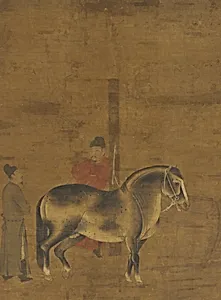
"Evaluating a Horse" is a Chinese painting from the Ming (1368–1644), once attributed to the Tang-era artist Han Huang (723–787). reattribution reflects evolving scholarly insights into Chinese art history, highlighting how works were often linked to illustrious Tang masters centuries later. Created during the Ming period—a golden age of refined brushwork and literati painting—the piece exemplifies the enduring tradition of depicting horses, symbols of power, loyalty, and imperial might in Chinese culture. The composition likely centers on a man closely inspecting a horse, a motif rooted in equestrian appreciation and connoisseurship. Horses held profound significance in Chinese society, from military campaigns to poetic metaphors in art, evoking Confucian ideals of harmony between man and nature. Though the medium remains unidentified, Ming paintings typically employed ink and subtle colors on silk or paper, showcasing meticulous line work and expressive forms. Acquired by the visionary collector Charles Lang Freer by 1916, this artwork entered the Smithsonian American Art Museum as a generous gift. Part of the esteemed Freer collection, it invites visitors to ponder the artistry of everyday observation elevated to philosophical depth, bridging centuries of cultural reverence for the noble steed.