
Ewer
1862–67
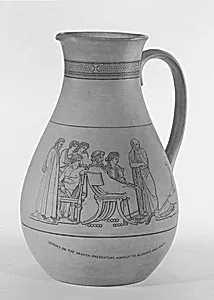
Medium
Red stoneware
Dimensions
Height: 7 1/2 in. (19.1 cm)
Classification
Ceramics-Pottery
Culture
British, London
Department
European Sculpture and Decorative Arts
Museum
Metropolitan Museum of Art, New York, NY
Credit
Gift of Mr. and Mrs. Rafi Y. Mottahedeh, 1976
Accession Number
1976.71.11
Rights
Public Domain
Tags
Art Historical Context
This elegant ewer, crafted by the Bishops Waltham pottery between 1862 and 1867, exemplifies mid-Victorian British ceramics at their finest. Standing just 7½ inches tall, this red stoneware pitcher—likely adorned with figural motifs of men and women—served both practical and decorative purposes in affluent households. Ewers like this were essential for pouring water or wine, blending everyday utility with ornamental appeal during the height of the Industrial Revolution, when British potteries innovated to meet growing demand for stylish tableware. Red stoneware, a dense, high-fired clay body prized for its durability and rich, earthy tone, marked a revival of earlier ceramic traditions while showcasing advanced Victorian techniques. Bishops Waltham, a Hampshire-based workshop with London market ties, specialized in such robust yet refined pieces, often unglazed or minimally decorated to highlight the material's natural sheen. This example reflects the era's fascination with historical revivalism, echoing 18th-century salt-glazed stoneware but adapted for modern tastes. Housed in The Metropolitan Museum of Art's European Sculpture and Decorative Arts collection, this gift from Mr. and Mrs. Rafi Y. Mottahedeh in 1976 invites us to appreciate how everyday objects embodied cultural sophistication, bridging art and domestic life in 19th-century Britain.