
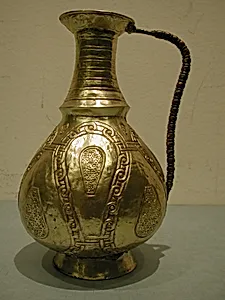
Ewer
Unknown Artist
19th century
Medium
Plated base metal
Dimensions
H. 8 5/16 in. (21.1 cm) Max. Diam. 4 15/16 in. (12.5 cm)
Classification
Reproductions
Department
Islamic Art
Museum
Metropolitan Museum of Art, New York, NY
Credit
Purchase, 1885
Accession Number
85.12.6
Rights
Public Domain
Art Historical Context
This elegant ewer, a classic vessel for pouring water or liquids, hails from the 19th century and the rich tradition of Islamic metalwork. Crafted from plated base metal—a technique that applied a thin layer of silver or other precious metal over a more affordable base—it exemplifies the era's innovative methods for creating luxurious yet accessible objects. Standing at 8 5/16 inches with a maximum diameter of nearly 5 inches, its graceful form would have been ideal for domestic rituals like ablutions or serving refreshments, common in Islamic households and mosques. As a reproduction acquired by The Metropolitan Museum of Art in 1885, this piece highlights the museum's early commitment to collecting Islamic art during a time of growing Western fascination with Eastern aesthetics. Such ewers often drew from centuries-old designs featuring intricate engravings, arabesques, or calligraphy, blending functionality with artistry. Though the artist remains unknown, the object's presence in the Islamic Art department underscores the cultural significance of metalwork in the Islamic world, where skilled artisans elevated everyday items into symbols of refinement and piety. (178 words)