
Ewer
Unknown Artist
first half 14th century
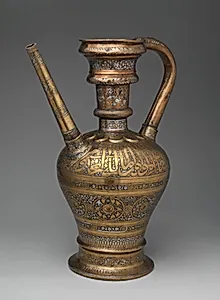
Medium
Brass; inlaid and engraved with silver, copper, and black compound.
Dimensions
H. 17 3/4 in. (45.1 cm) W. 13 1/4 in. (33.7 cm) Diam. 8 1/2 in. (21.6 cm)
Classification
Metal
Department
Islamic Art
Museum
Metropolitan Museum of Art, New York, NY
Credit
Edward C. Moore Collection, Bequest of Edward C. Moore, 1891
Accession Number
91.1.600
Rights
Public Domain
Art Historical Context
This exquisite brass ewer, crafted in first half of the 14 century, exemplifies the pinnacle of Islamic metalworking artistry. Standing 17¾ inches tall with a generous 13¼-inch width, it served as a vessel for pouring water, often used in rituals of purification or elegant hospitality in medieval Islamic courts. Its pear-shaped body, flared neck, and sturdy foot are masterfully adorned through engraving and inlay techniques, silver, copper, and black compound—likely niello—for striking contrasts and luminous effects. The anonymous artisan's skill reflects the sophisticated metalcraft traditions of the Islamic world, particularly under Mamluk patronage in Egypt and Syria during this era. Inlaying precious metals into engraved brass created durable yet opulent objects, blending functionality with storytelling motifs like arabesques, inscriptions, or figural scenes (though specifics here are not preserved). These techniques not only highlighted technical virtuosity but also symbolized wealth and piety, making such ewers prized possessions for elites. Housed in the Metropolitan Museum of Art's Islamic Art Department as part of the Edward C. Moore Collection (bequeathed 1891), this ewer invites us to marvel at the enduring legacy of medieval Islamic craftsmanship—where everyday utility met breathtaking beauty.