
Ewer
Unknown Artist
19th century
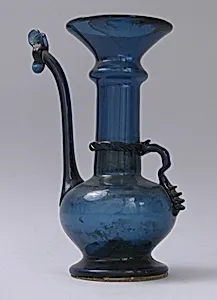
Medium
Glass; blown, folded foot, applied handle, applied spout, applied decoration
Dimensions
H. 7 3/8 in.
Classification
Glass
Department
Islamic Art
Museum
Metropolitan Museum of Art, New York, NY
Credit
Edward C. Moore Collection, Bequest of Edward C. Moore, 1891
Accession Number
91.1.1599
Rights
Public Domain
Art Historical Context
This elegant 19th-century e, crafted from glass by an unknown artist, exemplifies the glassmaking traditions of the Islamic world. Standing at 7 3/8 inches tall, it features a blown body with a folded foot for stability an applied handle for ergonomic use, and an applied spout and decoration that highlight the artisan's skillful manipulation of molten glass. These techniques— in Islamic glass production from the Middle East and beyond—allowed for both functional beauty and intricate designs, turning everyday vessels into objects of artistry. In the context of Islamic art, ewers like this one served practical purposes, such as pouring water for ablutions or serving beverages during social rituals, reflecting the culture's emphasis on hospitality and purity. By the 19th century, such pieces blended enduring Ottoman or Persian influences with evolving local styles, often showcasing trailed or pinched motifs that added texture and light play. Though unsigned, its presence in the Metropolitan Museum of Art's Edward C. Moore Collection (bequeathed in 1891) underscores its value among collectors who prized Islamic craftsmanship for its technical virtuosity and subtle elegance. Visitors might imagine this ewer gracing a merchant's home, catching candlelight with its shimmering surface—a testament to how Islamic artisans elevated the mundane into the magnificent.