
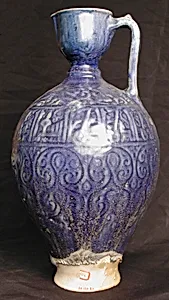
Ewer
Unknown Artist
12th–13th century
Medium
Stonepaste; glazed
Dimensions
Ht. 14 15/16 in. (38 cm) Diam. 7 1/2 in. (19 cm)
Classification
Ceramics
Department
Islamic Art
Museum
Metropolitan Museum of Art, New York, NY
Credit
The Grinnell Collection, Bequest of William Milne Grinnell, 1920
Accession Number
20.120.20
Rights
Public Domain
Art Historical Context
This elegant ewer, crafted in the 12th–13th century, exemplifies the sophistication of Islamic ceramics during the period. Standing at nearly 15 inches tall with a 7.5-inch diameter, it as a practical vessel for pouring water, often used in rituals of purification or gracious hospitality in households and mosques. Housed in the Metropolitan Museum of Art's Art Department, it entered the collection through the Grinnell Collection, bequeathed by William Milne Grinnell in 1920. Made from stonepaste—a innovative composite of quartz, clay, and frit (ground glass)—and finished with a glossy glaze, the ewer highlights a key technological achievement of Islamic potters, particularly in regions like Iran and Syria. This medium allowed artisans to create porcelain-like translucency and durability, mimicking coveted Chinese imports they could not yet replicate. The glazing technique not only protected the body but enhanced its luster, making such objects prized luxury items that reflected cultural refinement and technical mastery. Though the artist remains unknown, this ewer embodies the era's vibrant ceramic tradition, where form met function in everyday elegance, bridging utility and artistry across the Islamic world.