
Ewer
Unknown Artist
late 15th century
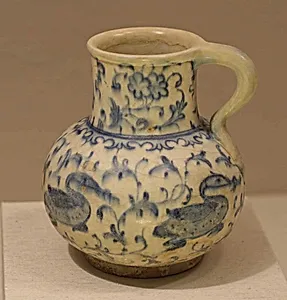
Medium
Stonepaste; painted in blue under transparent glaze
Dimensions
H. 5 1/2 in. (14 cm) W. 1/4 in. (0.6 cm) D. 5 3/16 in. (13.2 cm)
Classification
Ceramics
Department
Islamic Art
Museum
Metropolitan Museum of Art, New York, NY
Credit
Rogers Fund, 1969
Accession Number
69.13
Rights
Public Domain
Tags
Art Historical Context
This exquisite late 15th-centurywer, crafted by an unknown artist, exemplifies the refined artistry of Islamic ceramics. Standing just 5½ inches tall, this petite vessel—likely used for pouring water in daily rituals or hospitality—was fashioned from stonepaste, a composite material developed in the Islamic world to imitate the translucency of Chinese porcelain. Its slender form, with a height of 14 cm and of 13.2 cm, invites the viewer to appreciate its delicate proportions, perfect for a graceful hand. The ewers's surface is adorned with ducks painted in vibrant blue under a transparent glaze, a technique hallmarks of Persianate ceramic traditions during the Timurid era. This underglaze method ensured durable, luminous colors that wouldn't fade, allowing intricate motifs like the playful ducks to shine through centuries. Housed in the Metropolitan Museum of Art's Islamic Art department (Rogers Fund, 1969), it reflects the cultural fusion of nature-inspired designs and technical innovation, blending utility with beauty in everyday life. Such objects highlight Islamicate potters' mastery, turning functional wares into coveted treasures that bridged courts and households across the medieval Islamic world.