
Ewer - Fulton Steamboat
c. 1940
Medium
watercolor, gouache, colored pencil, graphite, andheightening on paperboard
Dimensions
overall: 38.5 x 31.5 cm (15 3/16 x 12 3/8 in.) Original IAD Object: 7 1/2" High
Classification
Index of American Design
Department
CG-W
Museum
National Gallery of Art, Washington, D.C.
Credit
Index of American Design
Accession Number
1943.8.6207
Rights
Public Domain
Art Historical Context
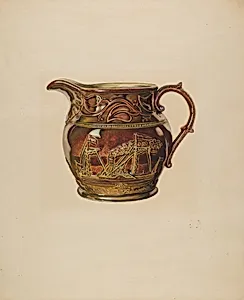
George Yarosko's *Ewer - Fulton Steat* (c. 1940) is a vibrant watercolor rendering capturing an exquisite American decorative object: a slender ewer, or pitcher, standing about 7½ inches tall and adorned with motifs inspired by Robert Fulton's steamboat, the *Clermont* (launched in 1807). This functional yet artistic vessel reflects early 19th-century folk craftsmanship, blending utilitarian pottery with patriotic symbolism of American ingenuity and industrial progress. Yarosko precise depiction highlights the ewers elegant spout, handle, and steamboat engravings, evoking the era's fascination with steam-powered innovation that transformed river travel and commerce. Created as part of the Index of American Design (IAD), a Works Progress Administration (WPA) project from the 1930s–1940s, this artwork served a vital cultural mission. Hundreds of artists like Yarosko meticulously documented everyday American folk art and design objects threatened by time or neglect, preserving them through detailed plates for museums and scholars. Housed in the National Gallery of Art, it exemplifies the IAD's commitment to celebrating vernacular creativity during the Great Depression. Yarosko employed a rich mixed-media technique—watercolor, gouache, colored pencil, graphite, and heightening on paperboard—to achieve luminous depth and texture (38.5 x 31.5 cm). This methodical approach not only records form and color but also revives the spirit of America's inventive past for today's visitors.