
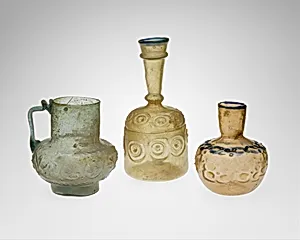
Ewer with Floral Scroll
Unknown Artist
12th century
Medium
Glass, green; mold blown, applied handle
Dimensions
H. 5 3/4 in. (14.6 cm)
Classification
Glass
Department
Islamic Art
Museum
Metropolitan Museum of Art, New York, NY
Credit
Rogers Fund, 1947
Accession Number
47.85.2
Rights
Public Domain
Art Historical Context
This delicate 12th-century green glass ewer, adorned with intricate floral scroll motifs, exemplifies the refined artistry of Islamic glassmaking during the medieval Islamic world. Standing just 5 3/4 inches tall, it served as a practical vessel for pouring water, rosewater, or other liquids in households, reflecting everyday luxury in regions like Syria, Egypt, Iran where such objects thrived. The floral designs, evoking lush gardens of paradise—a recurring theme in Islamic art—highlight the culture's deep appreciation for nature's beauty and ornamental harmony. Crafted using mold-blowing, a sophisticated technique that allowed artisans to create detailed patterns efficiently by inflating molten glass into a patterned mold, the ewer features an applied handle for functionality and elegance. The vibrant green hue, likely from natural impurities in the glass or intentional copper additions, adds a jewel-like translucency prized in Islamic luxury goods. This method enabled widespread production of high-quality glassware, rivaling metalwork and influencing trade across the Mediterranean. Now part of the Metropolitan Museum of Art's Islamic Art collection (acquired through the Rogers Fund in 1947), this ewer offers a window into the technical innovation and aesthetic splendor of 12th-century Islamic craftsmen, blending utility with poetic decoration.