
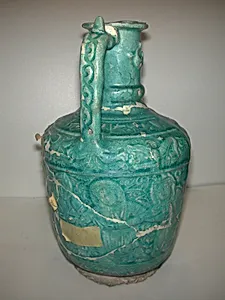
Ewer with Molded Inscriptions, Animals, and Dancers
Unknown Artist
last quarter 11th or 12th century
Medium
Stonepaste; molded, monochrome glazed
Dimensions
H. 11 1/2 in. (29.2 cm)
Classification
Ceramics
Department
Islamic Art
Museum
Metropolitan Museum of Art, New York, NY
Credit
Cora Timken Burnett Collection of Persian Miniatures and Other Persian Art Objects, Bequest of Cora Timken Burnett, 1956
Accession Number
57.51.16
Rights
Public Domain
Tags
Art Historical Context
This exquisite ewer, crafted in the last quarter of the11th or 12th century, hails from the Islamic world, likely Persia during the Seljuk period. Standing at 11½ inches tall, it served as a luxurious vessel for pouring water or rosewater in elite households, blending everyday utility with opulent artistry. Its surface features molded reliefs of inscriptions, lively animals, and graceful dancers—vivid snapshots of courtly life, entertainment, and festivity that prized in medieval Islamic society. Made from stonepaste (also called fritware), a innovative ceramic body developed by Islamic potters to mimic the translucency of Chinese porcelain, the ewer was molded with intricate designs before being coated in a monochrome glaze, probably turquoise, which highlights the raised motifs with subtle sheen. This technique, perfected in centers like Kashan, allowed for detailed storytelling without colorful overglazes, emphasizing form and texture. Housed in the Metropolitan Museum of Art's Islamic Art department as part of the Cora Timken Burnett Collection, this anonymous masterpiece showcases the technical ingenuity and cultural vibrancy of medieval Persian ceramics, offering a window into a world where art elevated the mundane to the magnificent.