
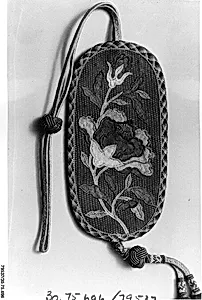
Eyeglass Case
Unknown Artist
18th–19th century
Medium
Silk, metallic thread
Dimensions
5 3/4 x 2 3/4 in. (14.61 x 6.99 cm)
Classification
Textiles-Embroidered
Culture & Period
China · Qing dynasty (1644–1911)
Department
Asian Art
Museum
Metropolitan Museum of Art, New York, NY
Credit
Bequest of William Christian Paul, 1929
Accession Number
30.75.696
Rights
Public Domain
Art Historical Context
Nestled in the Metropolitan Museum of Art's Asian Art collection, this delicate *Eyeglass Case* China's Qing dynasty (164–1911) exemplifies the's masterful embroidery traditions. Crafted in the 18th–19th century by an unknown artist, the small pouch—measuring just 5 3/4 x 3/4 inches—served a practical purpose: protecting spectacles, which were increasingly common among the literate elite during this prosperous period of imperial refinement. Woven from luxurious silk and shimmering metallic threads, the case showcases the intricate needlework techniques perfected by Qing artisans. Embroidery was a revered craft in China, often transforming everyday objects into symbols of status and artistry. The use of metallic threads added a touch of opulence, catching the light to evoke the grandeur of courtly life, even in personal accessories. Bequeathed to the Met in 1929 by William Christian Paul, this textile invites us to appreciate the anonymous skill behind Qing craftsmanship—a reminder that beauty flourished in the details of daily life.