
Fan
Unknown Artist
third quarter 18th century
Medium
mother-of-pearl, paper, gouache
Classification
Fan
Culture
probably French
Department
Costume Institute
Museum
Metropolitan Museum of Art, New York, NY
Credit
Brooklyn Museum Costume Collection at The Metropolitan Museum of Art, Gift of the Brooklyn Museum, 2009; Gift of Orme Wilson, 1954
Accession Number
2009.300.1491
Rights
Public Domain
Tags
Art Historical Context
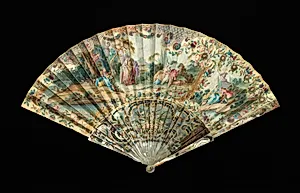
This elegant fan, crafted in the third quarter of the 18th century—likely during the 1770s or 1780s—exemplifies the refined artistry of probably French fan-making, a hallmark of European fashion in the Age of Enlightenment. Fashioned from shimmering mother-of-pearl sticks, delicate paper, and vibrant gouache paints, it served as both a practical accessory for cooling oneself and a subtle tool for social signaling. Mother-of-pearl, prized for its lustrous iridescence, added a touch of opulence, while gouache—an opaque watercolor technique—allowed for rich, detailed imagery on the paper leaf, capturing the era's love for intricate decoration. In 18th-century France, fans were indispensable for both men and women, transcending gender norms in high society. Women fluttered them coyly during dances or conversations, conveying flirtation through a codified "language of the fan," while men used them to appear polished at courtly gatherings or operas. This piece, from the Brooklyn Museum Costume Collection now at The Metropolitan Museum of Art's Costume Institute, reflects the period's blend of luxury and performance, just before the French Revolution upended aristocratic excess. Though the artist remains unknown, the fan's craftsmanship highlights the skilled anonymous artisans of the time, whose work turned everyday objects into canvases of cultural expression. A delightful glimpse into Rococo-era elegance!